How to prepare a boat for sale
A practical guide from BrokerBarche to sell your boat at the right price, with method and transparency.
- Reading time: 8 minutes
An important choice, made simpler
Selling a boat requires careful preparation that goes far beyond simply advertising it online. Preparing the boat for sale It means taking care of every detail, from mechanical maintenance to aesthetics, to present the potential buyer with a reliable and ready-to-navigate vehicle.
The first concrete step is to assess the current state of the boat with a critical eye. What would a buyer see upon boarding for the first time? What questions would they ask during a test dive? Anticipating these situations allows you to approach the sale with confidence and transparency.
This guide takes you through the essential steps to maximize the perceived value of your boat and manage every aspect of the transaction professionally.
In the next paragraphs you will discover:
- How to perform targeted maintenance that reassures the buyer
- Which cosmetic procedures have the greatest visual impact?
- How to organize the necessary documentation
- What to prepare for visits on board
- How to conduct an effective and safe test at sea
A well-presented boat sells faster and for a better price. It is not about hiding defects, but about showing a boat that has been cared for by a careful boat owner. This communicates to the buyer that the vessel has been properly maintained over time.
The difference between a sale that drags on for months and one that is concluded within a reasonable timeframe often lies in the initial preparation. Investing time and resources before publishing the ad avoids exhausting negotiations and inconclusive visits.
Whether it's a sailboat, a motorboat or a dinghy, the basic principles remain the same: verifiable mechanical conditions, neat aesthetics and orderly documentation.
In this guide
What to prepare before selling
Documents
Property, registration, compliance and maintenance: everything is in order before publishing.
Evaluation
A realistic price arises from reliable conditions, the market, and comparisons.
Presentation and essential maintenance
When you decide to prepare the boat for sale, the visual appearance and general condition determine the buyer’s first impression. A well-presented presentation can significantly reduce the sales time and justify the asking price.
Deep cleaning and order
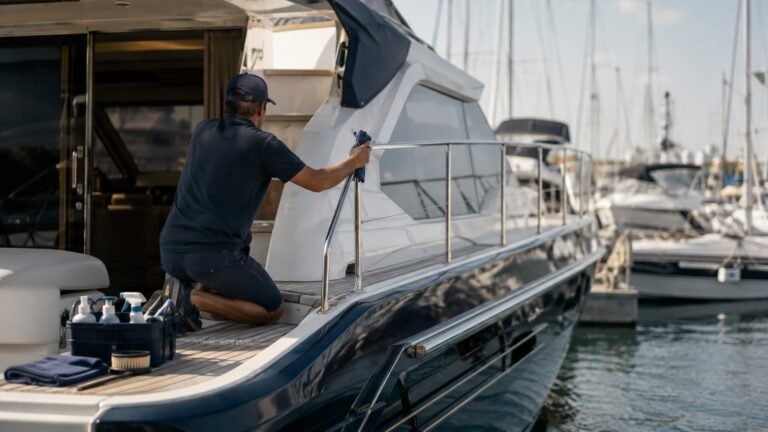
Start by thoroughly cleaning every surface, inside and out. The hull requires washing, polishing, and removing any encrustations under the waterline. The interior requires special attention:
- Cleaning of pillows, upholstery and curtains
- Cleaning of fuses, cabinets and engine compartments
- Antifouling and anti-mildew treatment in cabins
- Polishing of stainless steel, brass and glazed surfaces
Remove all personal belongings, private documents, and equipment not included in the sale. The buyer must be able to view the space as their own.
Small interventions and safety
Repairs visible defects that could discourage potential buyers: superficial scratches, cracked teak, squeaking hinges, or non-functioning lights. Check that safety equipment is present, in good condition and properly positioned.
Check the operation of:
- Sump pumps and electrical system
- On-board instrumentation
- Varnishes, winches and deck equipment
- Engine with start-up and water test
Consistent presentation
Maintain an orderly and neutral style. Remove stickers, personal decorations, and temporary modifications. Take photos only after completing the preparation, preferably with natural light and the boat in the water. A boat ready for sale conveys reliability and care, elements crucial for those considering purchasing it.
In-depth cleaning and details that make a difference
Start with the bilge: oil residues, stagnant water and unpleasant odors immediately discourage the buyer. Use specific degreasers for marine use and ensure that the drain holes are free of debris.
For teak, avoid the common mistake of sanding too aggressively. Cleaning with dedicated products followed by protective oil is sufficient in most cases. Check that the gaps are intact and that there are no cracks or separations.
Don't overlook these often forgotten elements:
- Interior of cabinets and lockers
- Air conditioning filters
- Window seals and door seals
- Removable cushion (also check the back)
Targeted interventions on safety
Check the expiration dates of the safety equipment: fire extinguishers, flares, and self-inflating rafts. Replacing expired items before selling conveys seriousness and care.
Check the operation of the navigation lights, the VHF and the on-board instruments. An experienced buyer will immediately notice malfunctioning indicators or defective displays.
Consistent presentation and depersonalization
Remove all personal items: photographs, souvenirs, clothing and customized fishing equipment. The goal is to allow the potential buyer to imagine the boat as their own.
Maintain a consistent style in the presentation: piles of mats arranged uniformly, fenders of the same size and color, cushions arranged symmetrically. These details communicate careful maintenance and respect for the boat.
Mistake to avoid: leaving old spare parts, empty tanks, or damaged equipment on board, thinking that you are “including everything”. It is better to present less, but in impeccable condition.
Preparation of visits and testing at sea
A well-organized visit can determine the success of the sale. Any detail overlooked risks fueling doubts in the buyer and compromising the negotiation.
Access and logistics
Make sure the boat is easily accessible, with a stable gangway and a deck free of obstacles. If the boat is dry, coordinate the launch in advance with the shipyard. Communicate realistic schedules and plan for unforeseen weather conditions.
Engine, batteries and tools
Before each visit, check that the engine starts smoothly and reaches the correct operating temperature. Check the oil level, filters, and for any leaks. The batteries must be fully charged; a discharged battery during a sea test conveys a poor maintenance impression. Turn on all the on-board instruments — echo sounder, GPS, VHF, navigation lights — to demonstrate their operation.
Documents and inventory
Keep the navigation license, the safety certificate and the documentation related to registration within easy reach. For clarification on the registration procedures, you can consult the information for water sports enthusiasts the Coast Guard or the page dedicated to’registration with the ATCN. Lo Electronic Sportsman Portal Confindustria Nautica offers additional useful resources. Prepare a detailed inventory of the accessories included in the sale.
Availability and management of observations
Be flexible with appointments, but avoid hasty visits. During the test, let the buyer drive the boat under your supervision. Respond to comments with transparency: admitting minor known defects strengthens your credibility and reduces the risk of subsequent disputes.
Practical checks on the engine and batteries
Before each visit, start the engine cold to check for immediate start. Check for any abnormal smoke: persistent white smoke may indicate problems with the cylinder head gasket, while black smoke suggests a misfiring engine.
Visually inspect the connections of the batteries: the terminals must be free of greenish oxidation and tightly crimped. Measure the resting voltage with a multimeter; values below 12.4V indicate discharged or damaged batteries. Replacing them before sale eliminates frequent objections.
Check the level of the engine oil and its color: a milky oil indicates water infiltration. Also check the fuel filters and the absence of leaks on the connections.
Instrumentation and documentation
Switch on all the onboard instruments and check that they are responding correctly. The GPS must acquire the signal, the echo sounder must show the actual depth, the VHF must transmit and receive. Report any malfunctions in your ad for selling a boat to avoid subsequent complaints.
Gather all the documentation in an organized folder:
- Updated navigation license
- Certificate of safety in force
- Engine manual with recorded service history
- Invoices for extraordinary maintenance
One yacht broker in Italy It can help you verify the completeness of the required documents.
Inventory and management of visits
Prepare a detailed inventory of the included accessories: safety equipment, electronics, tender, covers. Specify what remains on board and what is not.
During the visits, leave space for the buyer to explore freely. Note down any observations received: recurring criticisms indicate problems that need to be resolved. Those who wish to selling boats in Italy It must quickly be able to turn feedback into concrete improvements.
The sales process
Evaluate the boat
Prepare and photograph
Post and reply
Visits and negotiation
Contract and delivery
As a private individual or with a broker?
A quick comparison between self-managed sales and sales entrusted to a marine broker.
- Direct sales
- With a broker
| Required time | All at the seller's expense |
|---|---|
| Visibility | Portals and word of mouth |
| Contact | To be selected by yourself |
| Negotiation | Managed directly |
| Ideal for | Those who have time and experience |
| Required time | Activities delegated to the professional |
|---|---|
| Visibility | Portals and professional network |
| Contact | Qualified by the broker |
| Negotiation | Assisted and documented |
| Ideal for | Who wants method and assistance |
Stories of those who have already chosen to sail with us
Neil Burton
Marcelo Lassance
Daniel Zerafa
Conclusion: a well-maintained boat sells better
Preparing the boat for sale requires attention on several fronts: from Accurate cleaning From engine maintenance to complete documentation and a well-organized presentation. Every detail contributes to conveying confidence to the buyer and enhancing the value of the boat on the market.
By following these practical tips, you will present a unit ready for visits and sea trials, reducing negotiation times and objections.
The next step is to define a effective sales strategy. If you want professional support for the evaluation, promotion, and management of negotiations, the advice of a yacht broker can simplify the entire process.
Find out how selling your boat in Italy With the right approach, you will reach genuinely interested buyers.
Frequently asked questions
Frequently asked questions about how to prepare the boat for sale
Which maintenance work is worth doing before selling the boat?
Is it necessary to perform a complete refit before selling the boat?
How to clean the boat effectively for buyer visits?
Is it better to sell the boat on water or on land?
What checks should be performed on the engine before selling the boat?
Do I have to remove all personal belongings from the boat before the visits?
How to organize the visits of potential buyers?
Is it mandatory to provide a test at sea during the sale?
Which documents should I prepare for the sale of the boat?
Is it advisable to reapply the anti-fungal product before selling it?
Read more articles


Do you want to sell your boat? Request a valuation
Indicates model, year and marina: a BrokerBarche broker will contact you to provide a realistic assessment.
- Non-binding request
- Data treated confidentially
- You are answered by a BrokerBarche broker