Trial of a used boat at sea
A practical BrokerBarche guide to buying your boat methodically and with peace of mind.
- Reading time: 8 minutes
An important choice, made simpler
Make a sea trial of a used boat It represents the decisive moment before any purchase. It’s the moment when you can see with your own eyes whether the boat meets your expectations and whether it hides invisible problems that are invisible from a standstill on the dock.
This guide takes you through two fundamental steps: the careful preparation of the test and the elements to be carefully observed during navigation. At the end, you will know exactly how to organize the outing and which signals to recognize to assess the real condition of the hull, the engine, and the on-board systems.
Too many buyers limit themselves to a quick look around the property, missing the opportunity to spot defects that will only become apparent after the inspection. A methodically conducted inspection, however, can save you thousands of euros in unexpected repairs or simply avoid a bad deal.
Here's what you'll find in the upcoming sections:
- How to organize the test at sea: documents to be requested, ideal weather conditions, equipment to bring, and questions to ask the seller before setting sail.
- What to check during navigation: hull behavior at different speeds, rudder response, abnormal noises, operation of the instrumentation, and verification of electrical and hydraulic systems.
The goal is not to turn you into a naval expert, but to provide you with a practical checklist to conduct an autonomous and conscious assessment. You will be able to distinguish the normal signs of wear from the warning signs that require the intervention of a specialized technician.
Whether you are considering a sailing boat, a motorboat or a cabin inflatable boat, the principles remain the same: systematic observation, testing under different conditions, and cross-checking what is stated and what is actually found in the water.
We proceed with the first step: preparing the test in the correct way.
In this guide
What to evaluate before buying
How to prepare for the test at sea
Testing a used boat at sea requires careful preparation to obtain reliable results. Organizing every detail in advance avoids time wastage and ensures a comprehensive assessment of the vessel.
Agreement with the seller and those present
Before the trial, agreed in writing with the seller:
- Date, time and expected duration of the exit
- Who will drive the boat during the test
- Any costs for fuel or mooring
- Liability in the event of accidental damage
Request the presence of the owner or a representative who is familiar with the boat. If possible, have a marine technician or a trusted expert accompany you to assess mechanical and structural aspects during navigation.
Documents to verify
Before boarding, check that the seller has:
- Valid navigation license or safety certificate
- Active RC insurance for the trial
- Engine and hull maintenance record
- Certificate of ownership or document proving origin
Take photos of these documents to compare them later with the data declared in the ad.
Conditions and safety
Choose a day with stable weather and calm sea For the first outing: adverse conditions mask some defects and amplify others, distorting the assessment. Ensure that mandatory safety equipment is present on board, including life jackets, a fire extinguisher, and signal flares.
Plan the checks to be performed: cold start, maneuvering in port, acceleration, tight turns, and navigating at different speeds. During the test of the used boat, note down any anomalies to discuss them later with the seller.
Preparation of documentation
Before boarding, check that the seller has the navigation license, the valid safety certificate, and the engine documentation with them. Check that the data displayed actually corresponds to the hull: serial number, year of construction, declared power.
Also request the original user manual and maintenance booklet, and, if available, the history of any repairs performed. The absence of these documents is not necessarily a serious problem, but it is an element to consider when negotiating the price.
Preliminary agreements with the seller
Set it up in advance:
- Who provides the fuel for the test
- The minimum agreed duration (at least 30-40 minutes allows for an assessment of the thermal behavior of the engine)
- The ability to perform specific maneuvers such as extended reverse, quick acceleration, and navigation in different modes
Avoid accepting tests that are too short or limited to a simple round in the harbor. A seller who places excessive restrictions could be hiding mechanical problems that emerge only after a certain period of operation.
Security and checks before departure
Check the presence on board of life jackets, fire extinguishers and basic safety equipment. Ensure that the navigation lights are working and that the VHF radio, if present, is operational.
Visually inspect Check the bilge before starting the engine: traces of oily water, suspicious residues, or excessive moisture warrant further investigation. Observe the condition of visible electrical connections and the bandaging on the pipes.
Bring an experienced guide with you if you are not familiar with boats. Four eyes notice details that are missed during the focus on driving.
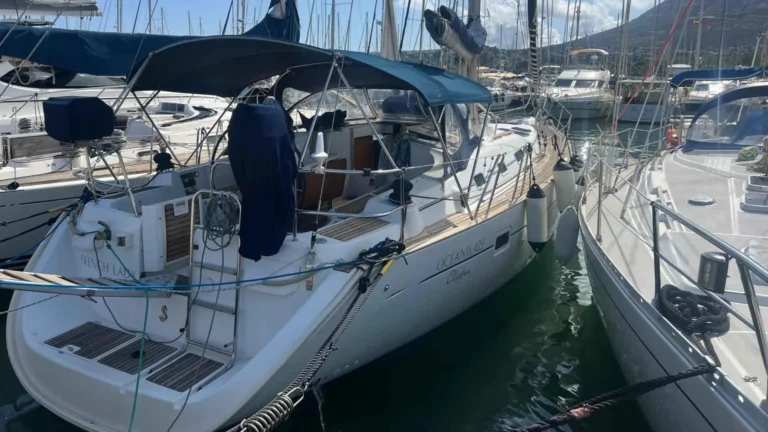
What to observe during navigation
Once in the water, every minute becomes precious for assessing the actual condition of the vessel. Proceed methodically, noting any anomalies on a waterproof pad.
Starting and engine behavior
Observe whether the engine starts on the first attempt or requires repeated attempts. A difficult start at cold temperatures may indicate problems with the fuel system, the battery, or the spark plugs. Once started, let it run at low speed for a few minutes: the RPMs should stabilize without any irregular fluctuations.
Manoeuvre and response of the steering wheel
Perform tight turns to the right and left, checking that the boat responds progressively and predictably. Excessive play in the helm or delays in response suggest wear in the cables, transmission bars, or hydraulic cylinders. Also test reverse gear: the inverter must engage without violent jerks.
Vibrations, noises and temperatures
Abnormal vibrations at certain speeds can be caused by damaged propellers, misaligned shafts, or deteriorated engine mounts. Pay attention to metallic noises, structural squeaks, or whistling from the cooling system. Regularly check the instrument panel: engine temperature e oil pressure They must remain within the normal values for the entire test.
Checking the sails
On sailing units, rigged with a randa and a bowline, observing smooth sailing in the channels and the integrity of the seams. Damaged sails or weakened fabric compromise performance and represent a significant replacement cost.
Annotation of the results
Document all observations to compare them with any statements made by the seller. Before finalizing the purchase, remember that you can consult the Information for Coast Guard sailors for clarification on the necessary documentation and procedures registration with the ATCN, while he Electronic Sportsman Portal simplifies the subsequent administrative procedures.
Practical checks on engine and transmission
During cold start, observe the color of the exhaust gases: persistent white smoke may indicate water in the combustion chamber, while excessive black smoke suggests problems with the fuel injection system or injectors. Note the time it takes to reach operating temperature and verify that the thermostat is functioning properly.
Set the engine to various speeds and keep it stable for a few minutes. Abnormal vibrations often occur at specific speeds: they could be caused by a damaged propeller, worn engine mounts, or misalignment of the shaft. Place one hand on the dashboard to feel unusual tremors.
Items to check during navigation:
- Stable oil pressure in various regimes
- Water temperature within the parameters
- No leakage from the pre-stop and fittings
- Operation of the inverter forward and backward
Steering and maneuverability
Perform tight turns at low speed to assess the rudder response. Excessive play in the wheel or bar indicates wear of the cables, bushings, or sector. If the boat tends to pull to one side, there may be issues with the trim or damage to the sternlight.
Before proceeding with a proposal to buy a boat, verify that all onboard instruments provide consistent readings. A yacht broker in Italy It can help you interpret any abnormalities that are found.
Sailboats and deck equipment
If present, raise the sails and check the flow in the channels. Look for signs of wear along the seams and at the points of the rigging, rigging, and rigging points. Check the operation of the windlass, winch, and stopper under actual load. Consult the boats for sale in Italy to compare similar equipment.
The purchasing journey
Define your requirements
Select and visit
Inspections and expert report
Negotiate and sign
Bank transfer and handover
New or used?
A quick comparison between a used boat and a new boat based on the criteria that matter most when making a choice.
- Used boat
- New boat
| Price | More advantageous |
|---|---|
| Availability | Immediate |
| Depreciation | More content |
| Choice | Wide variety of models |
| Ideal for | Who is looking for value and flexibility |
| Price | Higher |
|---|---|
| Availability | Delivery times |
| Depreciation | Greater in the early years |
| Choice | Custom configuration |
| Ideal for | Who wants to customize |
Stories of those who have already chosen to sail with us
Neil Burton
Marcelo Lassance
Daniel Zerafa
Conclusion: From the test at sea to the purchase decision
A sea test conducted methodically represents the best protection for anyone buying a used boat. By following the controls described — from starting to maneuvering, from the helm to the onboard instruments — you will have gathered concrete information about the actual condition of the boat.
Before proceeding, review the notes taken during the navigation:
- Anomalies found and the related impact on the price
- Necessary interventions in the short and medium term
- Consistency between what the seller declared and what was verified
If some technical aspects remain uncertain, the advice of a nautical broker, BrokerBarche, can help you objectively assess the results and negotiate balanced terms.
When you are ready to compare other options, consult the boats for sale in Italy to identify the boat that best suits your needs.
Frequently asked questions
Frequently asked questions about the sea test of a used boat
How long does a test in the sea take for a used boat?
Who pays for the fuel during the sea trial?
Is specific insurance required for testing at sea?
Who must drive the boat during the test in the sea?
What happens if the weather does not allow the test at sea?
Does the test at sea have a separate cost from the expert report?
What should be checked during a sea test of a used boat?
Can I cancel the purchase if the test at sea is negative?
Does the test at sea replace the technical expertise of the boat?
Is it possible to bring a trusted technician along during the test at sea?
Read more articles


Looking for a boat? Tell us what you need
Specify boat type, budget, and area: get a targeted selection instead of scrolling through dozens of listings.
- Non-binding request
- Data treated confidentially
- You are answered by a BrokerBarche broker